Category: General

  • Niềng xong có cần hàm duy trì? Răng chạy, lịch đeo, tái khám

    Niềng xong có cần hàm duy trì: Có, hàm duy trì giúp giữ răng ở vị trí mới và hạn chế dịch chuyển sau tháo niềng. Theo lịch tham khảo trên, một số người cần đeo 20–22 giờ/ngày trong 3–6 tháng đầu, sau đó chuyển sang ban đêm và duy trì lâu dài. Tuy nhiên, thời gian đeo phải được bác sĩ cá nhân hóa theo loại hàm và tình trạng răng; không nên tự giảm giờ hoặc ngừng đeo.

    Bài viết được biên soạn để Thạc sĩ, Bác sĩ Nguyễn Hữu Nam tham vấn chuyên môn trước khi xuất bản. Mình sẽ cùng bạn tìm hiểu cách bảo vệ kết quả chỉnh nha, nhận biết răng chạy lại và xử lý khi khí cụ không còn vừa.

    Niềng xong có cần đeo hàm duy trì không?

    Hàm duy trì cần thiết trong đa số trường hợp

    Tháo niềng đánh dấu việc kết thúc giai đoạn dịch chuyển răng chủ động, không có nghĩa toàn bộ quá trình chăm sóc đã hoàn tất. Hiệp hội Chỉnh nha Hoa Kỳ khẳng định khí cụ duy trì là phần quan trọng để giữ vị trí răng sau điều trị bằng mắc cài hoặc khay chỉnh nha.

    Mình thích cách nhìn duy trì như phần tiếp nối của kế hoạch điều trị, thay vì một phụ kiện tùy chọn. Khi chuẩn bị tháo niềng, bạn nên biết loại hàm sẽ dùng, thời điểm nhận và lịch đeo cụ thể.

    Vì sao răng có thể chạy lại sau tháo niềng?

    Sau chỉnh nha, xương và mô quanh chân răng cần thích nghi với vị trí mới. Trong những tháng đầu, răng đặc biệt dễ dịch chuyển. Về lâu dài, tuổi tác, sự phát triển hàm, mòn răng và lực cắn hằng ngày cũng có thể ảnh hưởng vị trí răng.

    Do đó, răng đang nhìn đều không đồng nghĩa đã hết nhu cầu duy trì. Mình không khuyến khích tự ngừng đeo chỉ vì vài tháng đầu chưa thấy thay đổi.

    Không đeo hàm duy trì có thể làm mất kết quả chỉnh nha

    Bỏ duy trì có thể khiến răng dịch chuyển và làm giảm kết quả đã đạt được. Biểu hiện có thể là răng xoay, khoảng thưa xuất hiện hoặc chen chúc trở lại. Những trường hợp ban đầu có răng xoay nhiều hoặc khe thưa cần được chú ý trong kế hoạch duy trì.

    Không phải mọi người bỏ đeo đều thay đổi cùng tốc độ. Tuy nhiên, không thể dùng trải nghiệm của người khác để xác định thời gian ngừng đeo an toàn cho mình.

    Răng chạy lại sau niềng là gì?

    Tái phát chỉnh nha trong giai đoạn sớm

    “Tái phát chỉnh nha” là tình trạng răng có xu hướng thay đổi sau điều trị, có thể quay về gần vị trí trước đây. Nguy cơ thường cao hơn ở giai đoạn đầu khi mô nâng đỡ đang ổn định.

    Ví dụ, một người từng có răng cửa xoay có thể nhận thấy chiếc răng đó bắt đầu lệch lại nếu khí cụ không được sử dụng hoặc không còn hoạt động đúng. Khi phát hiện sớm, bác sĩ có thể đánh giá mức thay đổi và lựa chọn bước xử lý phù hợp.

    Dịch chuyển răng tự nhiên về lâu dài

    Không phải mọi thay đổi nhiều năm sau niềng đều là răng quay hoàn toàn về vị trí cũ. Răng còn chịu những biến đổi tự nhiên theo thời gian. Đây là lý do duy trì lâu dài vẫn được khuyến nghị, ngay cả khi kết quả đã ổn định trong giai đoạn đầu.

    Mình giữ cách giải thích trung lập: khí cụ giúp hạn chế dịch chuyển không mong muốn, nhưng không phải lời bảo đảm bộ răng sẽ bất biến suốt đời.

    Những nhóm răng dễ nhận thấy thay đổi

    Người bệnh thường nhận ra thay đổi ở vùng răng trước vì dễ quan sát khi cười. Bạn có thể thấy răng không còn thẳng như trước, khe thưa mới hoặc cảm giác hai hàm cắn khác đi.

    Hàm tháo lắp bỗng chật hoặc không ngồi hết vào vị trí cũng là dấu hiệu cần chú ý. AAO khuyến nghị liên hệ bác sĩ nếu khí cụ không vừa, khó đeo hoặc răng có dấu hiệu dịch chuyển.

    Khi nào cần kiểm tra sớm?

    Nên liên hệ cơ sở điều trị nếu:

    • Hàm duy trì không còn ôm sát hoặc không lắp hết.
    • Khí cụ gây đau thay vì chỉ cảm giác ôm nhẹ.
    • Dây cố định bung, gãy hoặc có vấn đề.
    • Răng lệch thấy rõ hoặc khớp cắn khác trước.
    • Có đau, sưng hay khó chịu kéo dài.

    Mình không khuyến khích chờ đến lần khám định kỳ nếu đã có những dấu hiệu này.

    Các loại hàm duy trì sau niềng răng

    Hàm duy trì trong suốt Essix

    Hàm trong suốt là khay nhựa tháo lắp ôm quanh răng, ít lộ khi đeo. Loại này được dùng để giữ vị trí răng sau chỉnh nha, khác với các khay chủ động dùng để dịch chuyển răng.

    Ưu điểm thực tế là có thể tháo để ăn và vệ sinh theo hướng dẫn. Tuy nhiên, hiệu quả phụ thuộc việc đeo đều; hàm mất, nứt hoặc không vừa cần được kiểm tra và thay thế khi cần.

    Hàm Hawley

    Hawley có nền nhựa hoặc acrylic kết hợp dây kim loại ở phía trước. Đây cũng là khí cụ tháo lắp, được bác sĩ lựa chọn theo nhu cầu từng người.

    Mình không xem Hawley hay hàm trong suốt là lựa chọn luôn tốt hơn. Điều quan trọng là khí cụ phù hợp, người dùng hiểu cách đeo và có khả năng tuân thủ.

    Hàm duy trì cố định mặt trong răng

    Khí cụ cố định thường là dây mảnh được dán ở mặt trong một số răng, thường thuộc vùng răng trước. Dây luôn ở trong miệng nên không phụ thuộc việc nhớ lắp mỗi tối, nhưng cần vệ sinh và kiểm tra thường xuyên.

    Nếu một điểm dán bong, chiếc răng liên quan có thể bắt đầu dịch chuyển. Vì vậy, “cố định” không có nghĩa không cần theo dõi.

    Phối hợp hai loại hàm duy trì

    Trong một số kế hoạch, bác sĩ có thể chỉ định cả dây cố định và hàm tháo lắp để đáp ứng nhu cầu duy trì. Việc lựa chọn phải dựa trên những răng cần giữ và kế hoạch cá nhân.

    Không nên tự bỏ khay chỉ vì đã có dây mặt trong. Hãy thực hiện đúng hướng dẫn về loại khí cụ và thời gian sử dụng mà bác sĩ đã thống nhất.

    Lịch đeo hàm duy trì được quyết định như thế nào?

    Đeo ngay sau khi tháo niềng theo hướng dẫn

    Trước khi kết thúc buổi tháo niềng, bạn nên được giải thích thời điểm nhận khí cụ và cách sử dụng. AAO cho biết người bệnh có thể nhận hàm trong ngày tháo hoặc một thời gian ngắn sau đó, tùy loại và quy trình chế tác.

    Mình khuyến khích hỏi rõ cách xử lý khoảng thời gian chờ. Không tự dùng một khí cụ khác để thay thế nếu chưa được xác nhận.

    Giai đoạn đeo nhiều giờ và giai đoạn đeo ban đêm

    Một số người được yêu cầu đeo phần lớn ngày và đêm lúc đầu, sau đó chuyển sang ban đêm. Người khác có thể được chỉ định đeo ban đêm ngay từ đầu. Lịch phụ thuộc ca điều trị và đánh giá của bác sĩ.

    Vì vậy, không nên áp dụng máy móc một mốc giờ hoặc số tháng từ bài viết trên mạng. Bạn cần biết:

    1. Khi nào phải đeo trong ngày.
    2. Những lúc cần tháo.
    3. Điều kiện để giảm thời gian sử dụng.
    4. Thời điểm kiểm tra lại.

    Duy trì lâu dài để giảm nguy cơ răng chạy lại

    Cả AAO và Hiệp hội Chỉnh nha Anh đều nhấn mạnh nhu cầu duy trì lâu dài. Lịch có thể được điều chỉnh theo độ ổn định, nhưng không nên tự giảm hoặc ngừng chỉ vì răng đang đều.

    Mình thích xây dựng thói quen đeo theo một thời điểm cố định. Thói quen dễ nhớ thường thực tế hơn việc chỉ dựa vào động lực sau ngày tháo niềng.

    Vệ sinh và bảo quản hàm duy trì đúng cách

    Vệ sinh hàm tháo lắp bằng nước mát và dụng cụ phù hợp

    Thực hiện theo hướng dẫn dành riêng cho vật liệu khí cụ. Với hàm nhựa, tránh nước nóng vì có thể làm thay đổi hình dạng. Không tự dùng hóa chất mạnh hoặc dụng cụ có thể làm xước bề mặt.

    Mình khuyến khích hỏi bác sĩ về sản phẩm làm sạch phù hợp. Chăm sóc khí cụ và vệ sinh răng đều là phần quan trọng của giai đoạn sau tháo niềng.

    Cất hàm trong hộp khi không đeo

    Khi tháo, đặt khí cụ trong hộp thay vì bọc khăn giấy hoặc để trên bàn ăn. Cách này giúp hạn chế thất lạc và hư hỏng do va chạm.

    Nếu hàm nứt, mất hoặc biến dạng, liên hệ cơ sở điều trị. Khí cụ hỏng hoặc không vừa không thể thực hiện đúng chức năng duy trì.

    Làm sạch kỹ quanh dây duy trì cố định

    Dây mặt trong tạo thêm vùng cần làm sạch. Bác sĩ có thể hướng dẫn cách vệ sinh quanh dây và các kẽ liên quan.

    Hiệp hội Chỉnh nha Anh nhấn mạnh vệ sinh tốt quanh khí cụ cố định để tránh vấn đề nướu, đồng thời kiểm tra định kỳ các điểm dán.

    Khi nào cần tái khám sau tháo niềng?

    Hàm duy trì bị chật, nứt, mất hoặc không ôm sát

    Liên hệ sớm khi hàm không còn vừa. Nếu đau hoặc không lắp hết, không cố ép bằng lực mạnh. Bác sĩ sẽ đánh giá khí cụ, mức dịch chuyển và bước tiếp theo.

    Không tự nung nóng, cắt hoặc mài hàm để làm cho vừa.

    Dây cố định bung, cong hoặc gây cấn

    Dây cố định cần được kiểm tra khi có dấu hiệu hỏng. Điểm dán bong có thể khiến răng không được giữ đúng; Hiệp hội Chỉnh nha Anh khuyến nghị liên hệ ngay khi khí cụ cố định bị gãy hoặc bung.

    Mình không khuyến khích tự kéo dây ra hoặc dùng keo tại nhà để gắn lại.

    Răng có dấu hiệu xoay, thưa hoặc chen chúc trở lại

    Khi thấy răng thay đổi, hãy đặt lịch đánh giá thay vì chỉ tăng giờ đeo theo suy đoán. Việc xử lý phụ thuộc mức độ dịch chuyển và khả năng vừa của khí cụ.

    Với người có kế hoạch điều trị phối hợp do mất răng, bạn có thể tham khảo thêm về phục hồi răng mất bằng Implant. Đây là chủ đề bổ sung, không phải phương pháp xử lý răng chạy lại sau niềng.

    Câu hỏi thường gặp về hàm duy trì

    Không đeo hàm duy trì một thời gian có sao không?

    Răng có thể dịch chuyển, nhưng không có một số ngày an toàn chung cho mọi người. Nếu đeo lại thấy chật, đau hoặc không vừa, liên hệ bác sĩ để kiểm tra.

    Hàm duy trì chật có nên cố đeo không?

    Cảm giác ôm nhẹ khác với đau hoặc không lắp hết. AAO khuyến nghị không cố ép khí cụ vào vị trí nếu đau hay không vừa hoàn toàn.

    Dây duy trì cố định có cần đeo hàm trong suốt không?

    Có thể cần nếu đó là kế hoạch đã được chỉ định. Dây thường gắn ở một nhóm răng, trong khi khay có phạm vi khác. Không tự bỏ một loại khi bác sĩ yêu cầu phối hợp.

    Mất hàm duy trì cần làm lại khi nào?

    Hãy liên hệ sớm để được hướng dẫn và sắp xếp kiểm tra. Bác sĩ cần xác định răng đã thay đổi hay chưa trước khi làm lại; không nên chờ đến khi nhìn thấy lệch rõ.

    Tái khám hàm duy trì tại Kim Dental

    Khí cụ cần vừa và được theo dõi để duy trì kết quả. Nếu cần tìm hiểu nơi tiếp nhận, bạn có thể tham khảo nha khoa quận Gò Vấp và xác nhận lịch trước khi đến.

    Nếu đang đồng thời điều trị Implant, hãy trao đổi riêng về chăm sóc sau phẫu thuật. Nội dung chăm sóc sau cấy ghép Implant là bài đọc bổ sung, không thay thế hướng dẫn dùng hàm duy trì.

    Thông tin liên hệ Kim Dental:

    • Địa chỉ theo thông tin cung cấp: 150–152 Hai Bà Trưng, P. Đa Kao, Q. 1, TP.HCM.
    • Hotline: 1900 6899.
    • Hỗ trợ đặt lịch qua WhatsApp, Viber hoặc Zalo: +84 829 006 899.

    Nên xác nhận địa chỉ hiện hành, cơ sở tiếp nhận và lịch bác sĩ trước khi đến.

    Nội dung chỉ mang tính tham khảo, không thay thế hướng dẫn trực tiếp từ bác sĩ chỉnh nha. Chỉ ghi nhận bài đã được tham vấn chuyên môn sau khi bác sĩ thực sự kiểm duyệt.

    Kết luận

    Niềng xong vẫn cần duy trì theo hướng dẫn để hạn chế răng dịch chuyển. Mình khuyến khích giữ lịch đeo, vệ sinh và kiểm tra sớm khi khí cụ không vừa. Hãy bình luận, chia sẻ hoặc đọc thêm trên website Kim Dental để hiểu cách bảo vệ kết quả chỉnh nha.
  • How Self-Belief Creates the Foundation for Success

    Understanding the Psychology of Motivation

    The psychology of motivation examines the thoughts, emotions, and behaviors that inspire people to pursue meaningful goals and continue moving forward despite obstacles. Motivation plays an essential role in personal development, education, career growth, and overall well-being. While many people wait for inspiration before taking action, the psychology RR88 of motivation shows that consistent effort and positive habits often create motivation naturally.

    People who understand the psychology of motivation recognize that success is built through daily decisions rather than occasional moments of excitement. By developing productive routines and maintaining a positive mindset, individuals can strengthen their motivation and create lasting achievements.

    Why Self-Belief Matters

    Self-belief is one of the strongest influences on the psychology of motivation. Individuals who believe in their ability to improve are more willing to accept challenges and remain persistent during difficult situations.

    Self-belief does not mean expecting immediate success. Instead, it means trusting that effort, learning, and patience will eventually produce meaningful results. This confidence encourages people to continue growing even when progress appears slow.

    Strong self-belief transforms uncertainty into determination and creates a powerful foundation for personal success.

    Creating Goals That Inspire Confidence

    Meaningful goals help strengthen motivation because they provide clear direction. The psychology of motivation explains that individuals stay committed when their goals reflect their personal values and long-term dreams.

    Breaking larger ambitions into smaller milestones makes progress easier to recognize. Every completed objective reinforces confidence and encourages continued effort.

    This gradual approach reduces stress while making even ambitious goals feel achievable.

    The Importance of Positive Daily Habits

    Habits influence long-term success more than temporary motivation. The psychology of motivation emphasizes that repeated positive actions eventually become automatic, creating reliable progress.

    Planning daily responsibilities, reading educational books, exercising regularly, maintaining healthy nutrition, and practicing valuable skills all contribute to stronger discipline. These habits reduce dependence on emotional excitement while improving consistency.

    Daily routines help individuals remain productive regardless of changing circumstances.

    Overcoming Fear Through Action

    Fear often prevents people from pursuing meaningful opportunities. The psychology of motivation teaches that action is one of the most effective ways to reduce fear and increase confidence.

    Each new experience provides valuable knowledge that makes future challenges easier to manage. Instead of waiting until they feel completely prepared, motivated individuals begin with the resources they already possess.

    Taking action creates experience, and experience gradually replaces fear with confidence.

    Building Resilience After Setbacks

    Challenges are unavoidable on the path to success. The psychology of motivation demonstrates that resilient individuals recover more quickly because they focus on learning instead of dwelling on disappointment.

    Every setback provides an opportunity to improve strategies and develop stronger problem-solving abilities. Rather than giving up, motivated people continue moving forward with greater wisdom.

    Resilience allows motivation to remain strong even during difficult periods.

    Healthy Living Supports Mental Strength

    Physical and mental health significantly influence motivation. The psychology of motivation highlights the importance of maintaining healthy habits that improve concentration, emotional balance, and productivity.

    Regular exercise increases energy, balanced nutrition supports brain performance, and quality sleep improves decision-making. Managing stress effectively also allows individuals to remain focused on long-term goals.

    Healthy living provides the strength needed for consistent personal growth.

    Learning Creates New Opportunities

    Continuous education is an important part of the psychology of motivation because learning keeps people engaged and optimistic about the future.

    Reading books, attending educational workshops, learning professional skills, and exploring creative interests all contribute to greater confidence and expanded opportunities. Every new skill makes individuals more adaptable in an ever-changing world.

    Lifelong learning ensures that motivation continues growing throughout every stage of life.

    Positive Relationships Encourage Success

    Supportive relationships strengthen motivation by providing encouragement, accountability, and constructive advice. Family members, friends, mentors, and colleagues all contribute to personal development through positive influence.

    The psychology of motivation explains that individuals surrounded by encouraging people often maintain greater confidence and stronger commitment to their goals. Positive environments make challenges feel more manageable while inspiring continuous improvement.

    Strong relationships also create emotional support that helps sustain long-term motivation.

    Conclusion

    The psychology of motivation reveals that self-belief, meaningful goals, healthy habits, resilience, lifelong learning, and supportive relationships form the foundation of lasting success. Motivation is not simply an emotional feeling but a skill developed through consistent action and thoughtful decision-making.

    By applying the Tải app RR88 principles of the psychology of motivation, individuals can overcome fear, strengthen confidence, and remain committed to continuous improvement. Every positive action, every lesson learned, and every challenge overcome contributes to a future filled with achievement, purpose, and personal fulfillment. With self-belief and determination, anyone can unlock their full potential and create lasting success through continuous growth and meaningful progress.

  • Ottoman Empire Explained: The Rise, Expansion, and Legacy of a Powerful World Empire

    Introduction

    The Ottoman Empire was one of the largest and longest-lasting empires in world history. Founded at the end of the thirteenth century, it grew from a small Turkish kingdom into a vast empire that stretched across Southeast Europe, Western Asia, and North Africa. For more than six hundred years, the Ottomans ruled millions of people from different cultures, languages, and religions. Their strong government, successful military, thriving trade, and remarkable architecture helped make the empire one of the most influential powers of its time.

    Studying the helps us understand how different cultures can exist within one large state. The empire connected East and West through trade, encouraged learning and artistic achievement, and influenced politics, architecture, and culture far beyond its borders. Its history continues to shape many countries today.

    The Beginning of the Ottoman Empire

    The Ottoman Empire was founded around 1299 by Osman I, a Turkish leader whose name later gave the empire its identity. At first, his kingdom was small, but it gradually expanded by capturing nearby territories. Strong leadership, disciplined soldiers, and strategic planning helped the Ottomans become one of the most successful powers in the region.

    As the empire grew, later rulers continued expanding into Europe, Asia, and Africa. Each victory strengthened the empire’s economy and increased its influence. New cities, trade routes, and diverse communities became part of Ottoman rule, creating a civilization that lasted for centuries.

    Constantinople Becomes Istanbul

    One of the most important moments in Ottoman history came in 1453 when Sultan Mehmed II captured Constantinople after a long siege. This historic victory ended the Byzantine Empire and marked the beginning of a new era. Constantinople became the Ottoman capital and was later widely known as Istanbul.

    The city quickly became one of the world’s greatest centers of trade, culture, and government. Its location between Europe and Asia allowed merchants from many regions to exchange goods, ideas, and traditions. Markets filled with silk, spices, precious metals, textiles, and handmade crafts attracted visitors from across the known world.

    Government and Daily Life

    The Ottoman Empire was ruled by a sultan, who served as the highest political and military leader. The government appointed skilled officials to collect taxes, maintain order, supervise public projects, and administer justice. This organized system helped the empire govern its vast territories efficiently.

    Daily life varied depending on where people lived and the work they performed. Farmers cultivated wheat, fruits, vegetables, and olives, while merchants traded goods across long distances. Craftsmen produced carpets, ceramics, jewelry, weapons, and fine textiles that became famous throughout the world. Large cities offered schools, markets, mosques, public baths, and workshops that supported thriving communities.

    Religion and Cultural Diversity

    One of the Ottoman Empire’s greatest strengths was its cultural diversity. People from many ethnic backgrounds and religious communities lived within the empire. Muslims formed the largest group, but Christians and Jews were also allowed to practice their religions under Ottoman rule, although they followed certain laws and paid specific taxes.

    This diversity encouraged the exchange of languages, traditions, foods, music, and artistic styles. The empire became a meeting place where ideas from Europe, Asia, and Africa blended together, creating a rich and unique cultural heritage.

    Trade, Education, and Great Achievements

    Trade played a central role in the empire’s prosperity. Because the Ottoman Empire controlled important land and sea routes connecting Europe and Asia, merchants transported valuable goods across its territories every day. These trade networks increased wealth and helped spread knowledge between different civilizations.

    Education was also valued. Schools taught religion, mathematics, literature, science, and law. Scholars translated important books and contributed to fields such as astronomy, medicine, and geography. Ottoman architects designed magnificent mosques, bridges, palaces, and public buildings that continue to impress visitors today. The beautiful Blue Mosque and Topkapi Palace remain famous examples of Ottoman architecture.

    Challenges and Decline

    Like many great empires, the Ottoman Empire eventually faced serious challenges. As Europe entered the Industrial Revolution, new technologies and stronger economies changed the balance of power. Internal political struggles, economic difficulties, and military defeats gradually weakened the empire.

    During the nineteenth and early twentieth centuries, many territories sought independence. After the First World War, the empire officially came to an end in 1922. The following year, the Republic of Turkey was established, beginning a new chapter in the region’s history.

    Why the Ottoman Empire Still Matters Today

    The Ottoman Empire left a lasting influence on the modern world. Its architecture continues to inspire builders, while its legal traditions, administrative systems, and cultural achievements remain important subjects of study. Many cities once ruled by the Ottomans still display magnificent buildings, bridges, markets, and monuments from that period.

    Historians study the empire because it demonstrates how diverse societies can coexist within a large state. Its long history also provides valuable lessons about leadership, trade, diplomacy, and the challenges of governing a multicultural empire across several continents.

    Frequently Asked Questions

    What was the Ottoman Empire?

    The Ottoman Empire was a powerful empire that ruled parts of Europe, Asia, and Africa for more than six hundred years.

    Who founded the Ottoman Empire?

    The empire was founded by Osman I around 1299, and his name inspired the title “Ottoman.”

    Why was Constantinople important to the Ottomans?

    After its capture in 1453, Constantinople became the empire’s capital and one of the world’s greatest centers of trade and culture.

    What made the Ottoman Empire successful?

    Strong leadership, organized government, military strength, thriving trade, and cultural diversity helped the empire prosper for centuries.

    Why is the Ottoman Empire important today?

    Its influence can still be seen in architecture, culture, government, trade, and the history of many modern countries.

    Conclusion

    The Ottoman Empire grew from a small frontier kingdom into one of history’s greatest empires through strong leadership, successful trade, and remarkable cultural achievements. For more than six centuries, it connected continents, encouraged learning, and shaped the lives of millions of people. Its rich legacy continues to king the an essential chapter in the story of world civilization.

  • International Accreditations Affirm the Quality of Education at Duy Tan University

    Amid the increasingly deep integration of higher education worldwide, international accreditations play a vital role in affirming the quality and reputation of educational institutions. Duy Tan University (DTU) is among the leading universities in Vietnam in terms of the number of internationally accredited academic programs, particularly those recognized by prestigious organizations such as ABET (USA) and UN Tourism, (formerly known as UNWTO)

    The Accreditation Board for Engineering and Technology (ABET) is a highly respected U.S.-based accreditation body and is widely regarded as the “gold standard” in engineering and technology education. Achieving ABET accreditation signifies that an academic program meets rigorous standards in curriculum content, faculty qualifications, facilities, and the ability to address practical industry demands.

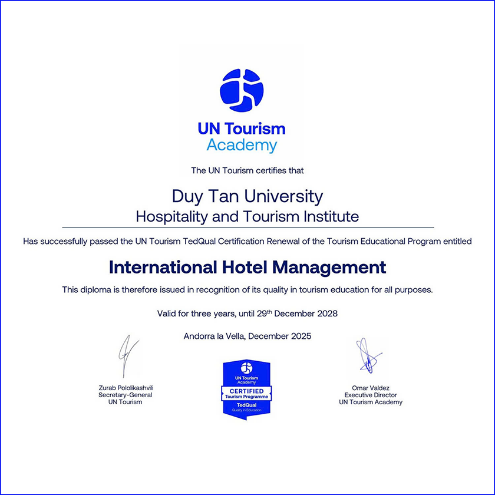
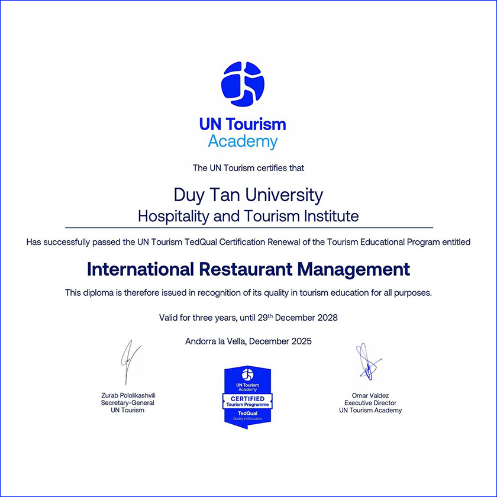
    UN Tourism TedQual accreditation certificate for 2025 – 2028 for the DTU program in International Hotel Management and International Restaurant Operations Management

    To date, DTU is one of only two universities in Vietnam with the highest number of ABET-accredited programs, totaling six.

    Among them, the Food Engineering Technology and Construction Engineering Technology programs were officially accredited by the Engineering Technology Accreditation Commission (ETAC) of ABET on August 28, 2025. Prior to that, DTU’s Electrical and Electronic Engineering program had been accredited in August 2020.

    Beyond engineering and technology disciplines, DTU has also established a strong presence in Information Technology, with several programs receiving ABET accreditation, including Software Engineering (accredited in 2021), Network Engineering (accredited in 2019 and reaccredited in 2025), and Management Information Systems (accredited in 2019). These achievements reflect the university’s systematic investment and strong commitment to the internationalization of information technology education.

    These latest recognitions further consolidate DTU ’s position as one of Vietnam’s two higher education institutions with the largest number of ABET-accredited programs, bringing the total number of recognized programs to six.

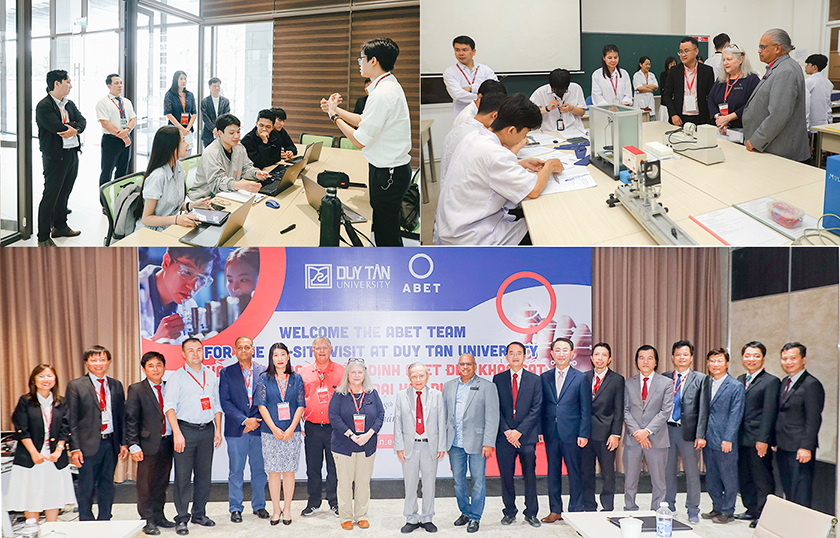
    The ABET accreditation evaluation for the Construction Engineering Technology program at DTU in 2024

    In addition to engineering and technology, DTU’s Tourism and Hospitality disciplines have also achieved significant milestones. In May 2025, they were once again recognized under the TedQual certification system by UN Tourism, formerly known as UNWTO. This recognition demonstrates the university’s commitment to practical, industry-oriented education and its ability to meet the evolving demands of the global tourism sector.

    Specifically, the International Hotel Management and International Restaurant Management programs were accredited with a score of 789 out of 845 points, representing fulfillment of 93% of the evaluation criteria, an improvement over the previous accreditation cycle. The certification is valid for three years, from December 2025 to December 2028 – the maximum period permitted under regulations – demonstrating the university’s consistency and continuous improvement in educational quality.

    These successive international accreditations from ABET and UN Tourism not only reinforce DTU’s standing within Vietnam’s higher education system but also reflect the university’s strong commitment to enhancing academic quality in accordance with international standards. They also provide a solid foundation for students to access modern, practice-oriented curricula and expand their opportunities in the global labor market.

    With a clear commitment to internationalization, DTU continues to strengthen its position as one of Vietnam’s pioneering institutions in achieving and maintaining internationally recognized accreditation standards from some of the world’s most prestigious organizations.

    Founded in 1994, Duy Tan University is the first and largest private university in Central Vietnam. Located in Da Nang City, Duy Tan University is multidisciplinary and diversified institution, with core strengths in Information Technology, Health Sciences, Tourism, and Engineering. Committed to internationalization, Duy Tan University has established academic partnerships with leading American universities such as Carnegie Mellon University and Purdue University. Duy Tan University is also consistently ranked among Asia’s leading universities and has earned prestigious international accreditations, including ABET and UN Tourism TedQual.Website: duytan.edu.vn
  • How CNC Machines Improve Production Efficiency

    In today’s competitive manufacturing environment, companies are under constant pressure to produce high-quality parts faster, more accurately, and at a lower cost. One of the most effective ways to achieve these goals is through the use of CNC machines. CNC, or Computer Numerical Control, technology has transformed modern manufacturing by automating machining processes that were once performed manually. From milling and turning to drilling, cutting, and grinding, CNC machines improve production efficiency across a wide range of industries.

    What Are CNC Machines?

    CNC machines are automated manufacturing tools controlled by computer programs. Instead of relying on manual operation, a CNC machine follows precise digital instructions, often created using CAD and CAM software. These instructions tell the machine how to move, where to cut, how deep to drill, and what speed to use.

    Common types of CNC machines include CNC milling machines, CNC lathes, CNC routers, CNC plasma cutters, and CNC laser cutters. They are used in industries such as automotive, aerospace, electronics, medical device manufacturing, metal fabrication, and woodworking.

    By combining automation with precision, CNC machining helps manufacturers increase output while maintaining consistent quality.

    Faster Production Speeds

    One of the biggest ways CNC machines improve production efficiency is by increasing production speed. Manual machining requires operators to adjust tools, measure parts, and control machine movements by hand. This process can be time-consuming and prone to delays.

    CNC machines, on the other hand, can perform complex operations quickly and continuously. Once the program is set up, the machine can repeat the same process over and over with minimal supervision. Many CNC machines can also operate at high spindle speeds and feed rates, reducing the time required to complete each part.

    This faster production speed allows manufacturers to complete more jobs in less time, meet tight deadlines, and take on larger orders without sacrificing quality.

    Improved Accuracy and Precision

    Accuracy is essential in manufacturing, especially when producing components that must fit together perfectly. CNC machines are designed to follow exact measurements and tight tolerances. Because they are controlled by computer programs, they can perform precise movements that are difficult or impossible to achieve manually.

    Improved precision reduces the number of defective parts and minimizes the need for rework. This is especially important in industries like aerospace, automotive, and medical manufacturing, where even small errors can lead to major problems.

    By producing accurate parts consistently, CNC machines help companies save time, reduce waste, and improve customer satisfaction.

    Consistent Quality Across Large Production Runs

    Consistency is another major advantage of CNC machining. In manual production, the quality of parts can vary depending on the skill, focus, and experience of the operator. Even experienced machinists may produce slight variations from one part to the next.

    CNC machines eliminate much of this variation. Once a program is tested and approved, the machine can produce hundreds or thousands of identical parts with the same level of quality. This is especially valuable for mass production and repeat orders.

    Consistent quality also makes inspection and assembly easier. When every part meets the required specifications, manufacturers can reduce downtime, avoid assembly issues, and maintain a smoother production workflow.

    Reduced Labor Costs

    CNC machines help reduce labor costs by automating many tasks that previously required manual work. A single trained operator can often monitor multiple CNC machines at once, depending on the complexity of the job and the level of automation in the facility.

    This does not mean that skilled workers are no longer needed. In fact, CNC machining requires trained programmers, operators, and maintenance technicians. However, automation allows these workers to focus on higher-value tasks such as programming, quality control, process improvement, and machine setup.

    By improving labor efficiency, CNC machines allow manufacturers to increase productivity without significantly increasing workforce size.

    Less Material Waste

    Material waste can have a major impact on production costs, especially when working with expensive metals, plastics, or composites. CNC machines reduce waste by using precise cutting paths and optimized machining strategies.

    With CAD/CAM software, manufacturers can plan toolpaths that make the best use of raw materials. CNC machines can also avoid unnecessary cuts and reduce errors that lead to scrapped parts. Since the process is highly repeatable, fewer materials are lost due to human mistakes.

    Lower material waste not only reduces costs but also supports more sustainable manufacturing practices.

    Shorter Setup and Changeover Times

    Modern CNC machines are designed to improve flexibility on the production floor. Once a part program is created, it can be saved and reused whenever needed. This makes repeat jobs much faster to set up.

    CNC machines can also be equipped with automatic tool changers, workholding systems, and advanced controls that reduce setup and changeover times. Instead of spending hours manually adjusting equipment, operators can load the correct program, install the required tools, and begin production quickly.

    Shorter setup times are especially beneficial for manufacturers that handle custom parts, small batches, or frequent product changes.

    Ability to Produce Complex Parts

    CNC machines can create complex shapes and detailed features that would be very difficult with manual machining. Multi-axis CNC machines, such as 4-axis and 5-axis machines, can move cutting tools in multiple directions, allowing for advanced geometries and intricate designs.

    This capability improves efficiency because complex parts can often be produced in fewer setups. Instead of moving a workpiece between several machines, a multi-axis CNC machine may complete most or all operations in a single setup.

    Fewer setups mean less handling, reduced risk of errors, and faster overall production.

     Improved Machine Utilization

    CNC machines can run for long periods with minimal interruption. In some facilities, they operate during extended shifts or even lights-out manufacturing, where machines continue producing parts with little or no human supervision.

    Automation features such as tool monitoring, part loading systems, and coolant management help maximize machine uptime. The more time a machine spends cutting parts instead of sitting idle, the more efficient the production process becomes.

    High machine utilization leads to better return on investment and increased overall output.

    Better Production Planning and Workflow

    CNC technology also improves production planning. Digital programs, machine data, and software integration make it easier to estimate cycle times, schedule jobs, and track performance. Manufacturers can identify bottlenecks, monitor machine usage, and make data-driven decisions to improve workflow.

    When CNC machines are connected with manufacturing software systems, companies gain better visibility into their operations. This helps managers plan resources, reduce downtime, and improve delivery times.

    Conclusion

    CNC machines improve production efficiency by increasing speed, accuracy, consistency, and automation. They reduce labor costs, minimize material waste, shorten setup times, and make it possible to produce complex parts with fewer errors. For manufacturers looking to stay competitive, CNC machining offers a powerful solution for improving productivity and maintaining high-quality standards.

    As technology continues to advance, CNC machines will play an even greater role in modern manufacturing. Companies that invest in CNC machining can benefit from faster production, lower costs, and greater flexibility in meeting customer demands.